Mixing vs Mastering: What's the Difference?
Mixing and mastering are two different stages of music production. Understanding what each one does can help you get better results from your music.
You've finished recording your song.
The vocals are there. The beat sounds good. You've listened to the track hundreds of times.
Then someone asks:
"Has it been mixed and mastered?"
And you're thinking: "Aren't those the same thing?"
No.
Mixing and mastering are separate stages of music production, and understanding the difference can help you make better decisions about your music.
WHAT IS MIXING?
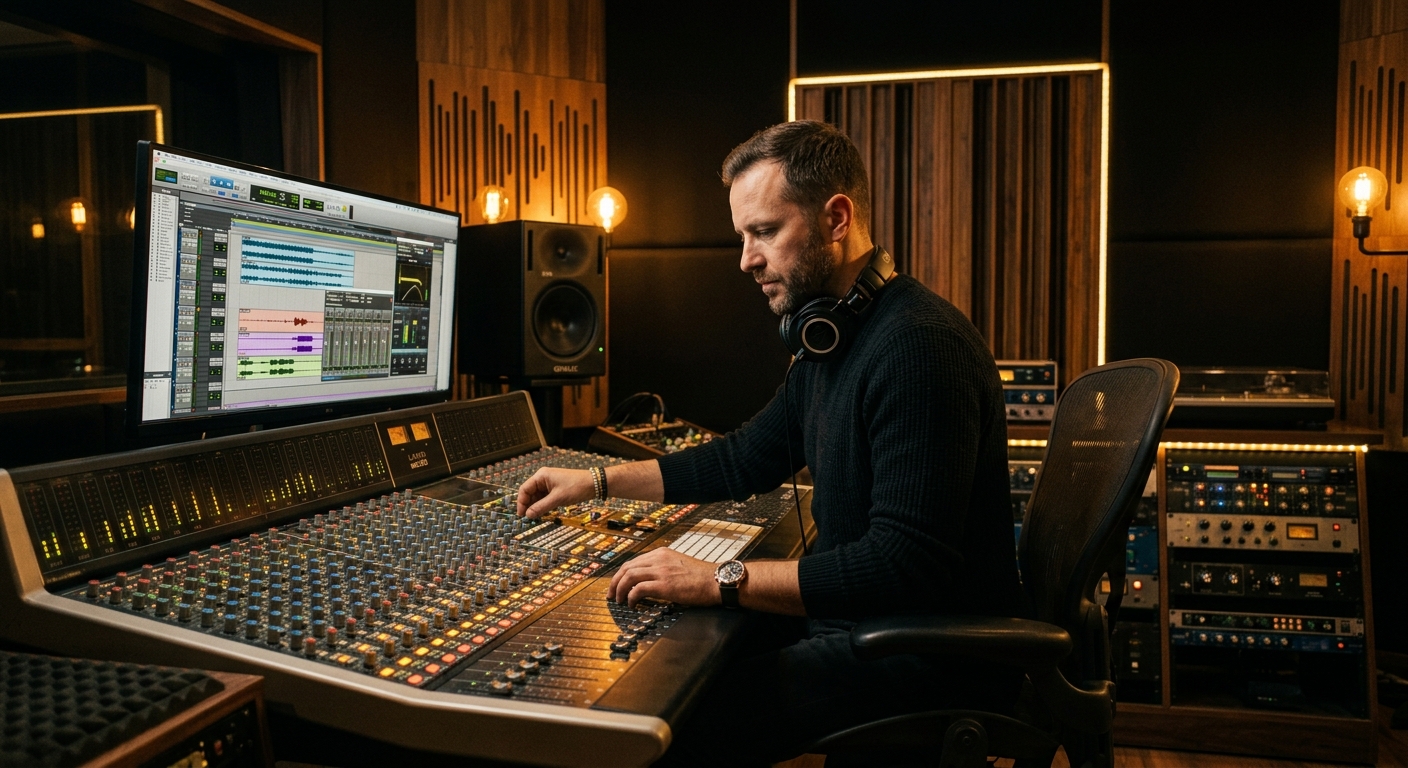
Mixing is the process of taking the individual elements of your song and making them work together.
Imagine your song contains lead vocals, background vocals, drums, bass, keys, guitars, percussion, synths and effects.
Each element needs to occupy its appropriate space.
A mixing engineer may adjust things such as:
Volume — How loud each element is relative to the others.
Panning — Where sounds sit in the stereo field.
EQ — Which frequencies are emphasized or reduced.
Compression — How the dynamics of sounds are controlled.
Reverb and delay — How space and depth are created.
Automation — How levels and effects change throughout the song.
The goal isn't simply to make everything louder.
The goal is to make the song cohesive, balanced and emotionally effective.
WHAT IS MASTERING?
Mastering happens after the mix is completed.
Think of mastering as the final stage of preparing your song for release.
The mastering engineer works with the finished stereo mix and makes adjustments that can improve its overall presentation.
This can include tonal balance, dynamics, loudness, stereo image, transitions and technical delivery requirements.
Mastering can also help songs within an EP or album feel more consistent with one another.
WHY CAN'T MASTERING FIX A BAD MIX?
This is one of the biggest misconceptions.
Mastering isn't supposed to rebuild your mix.
If the vocal is buried under the instrumental, the bass is overwhelming, or important elements are missing, mastering may not be able to properly solve the problem.
That's why a strong mix should come before mastering.
Think of it this way:
Mixing = building the picture.
Mastering = preparing the finished picture for presentation.
WHICH COMES FIRST?
The normal sequence is:
Recording → Editing → Mixing → Mastering → Distribution
Modern production workflows can vary, but the principle remains the same.
Don't rush to master a mix that still needs major changes.
DOES EVERY SONG NEED PROFESSIONAL MIXING?
If you're releasing music commercially, professional mixing can make a significant difference.
A listener may never know which compressor or EQ was used.
But they will notice when the vocals are difficult to understand, the bass overwhelms the song, the instrumental feels disconnected, the track sounds harsh or the song lacks clarity.
Good engineering isn't always obvious.
Sometimes its greatest achievement is making everything feel natural.
WHAT ABOUT MASTERING?
Mastering becomes especially important when you're preparing your final release.
Your song may be heading to streaming platforms, social media, radio or other digital platforms.
A properly prepared master gives your release a stronger technical foundation.
FINAL THOUGHT
Mixing and mastering aren't competing processes.
They're different stages working toward the same goal: helping your music sound its best.
If you're serious about releasing music, don't treat the final stages of production as an afterthought.
Got a finished recording that needs professional treatment?
Explore D-Vibes Studios' mixing and mastering services and give your music the final polish it deserves.
Finish your record
Ready for a professional final mix?
Bring your finished recording to D-Vibes for mixing and mastering built around the song—not a preset.
Explore servicesD-Vibes Studios
D-Vibes Studios editorial team · Production, recording, business & craft.